Chanel Luxury Brands Collection

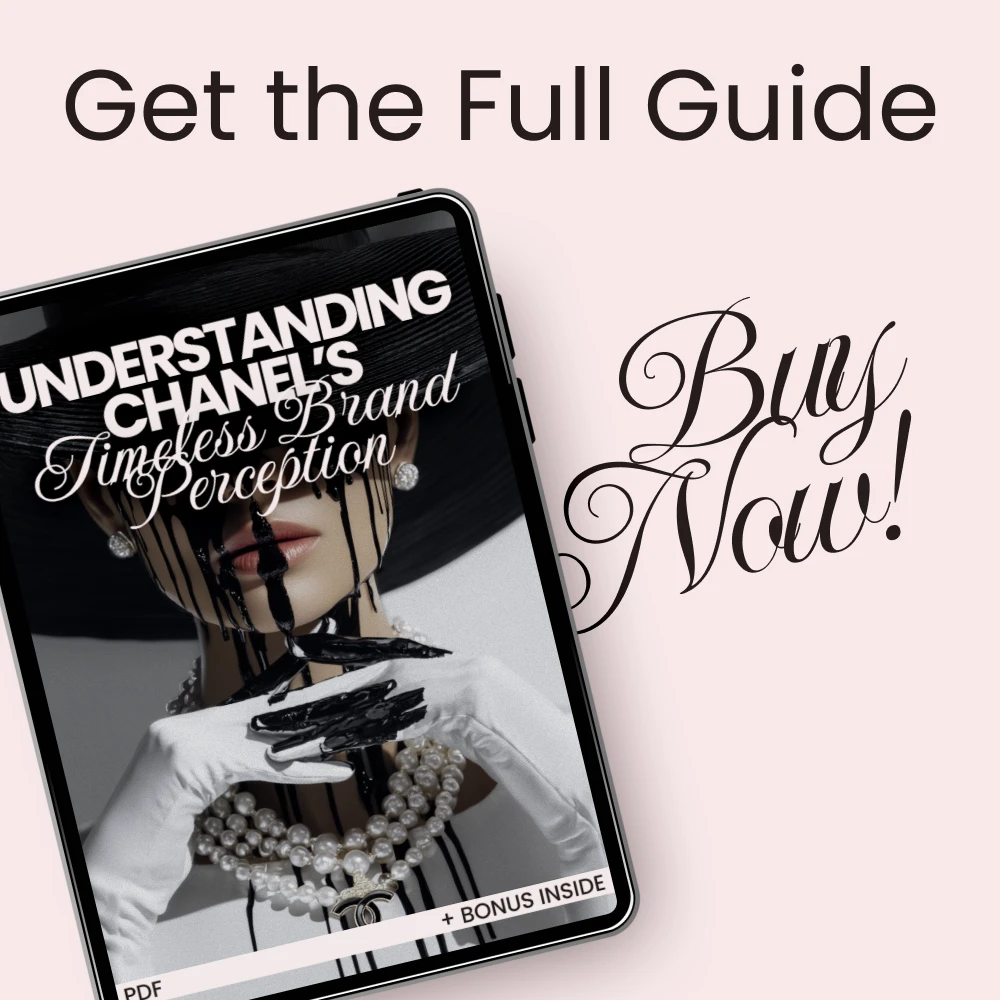
Understanding Chanel’s Timeless Brand Perception – Luxury Fashion Branding Guide on Chanel Brand Perception, AI Strategy & Prestige Marketing Insights

4.8 47 reviews 8795 sold
Selling fast — 100 people bought this in the last 24 hours
Popular right now — 333 people are viewing this product
Top rated — 4.8 stars from 8795 verified buyers
Limited offer — 50% off ends soon
Just purchased — Sean P. from Iowa bought this 27 min ago
What you'll get
Full digital product — instant access after purchase
Works on any device — phone, tablet, desktop
Free lifetime updates included
30-day satisfaction guarantee
Shipping Time: Shipping cost: US $0.00 US $0.00
Secure Checkout
Instant Access
30-Day Guarantee

A complete digital product, made by experts and yours to keep for good. Get instant access the moment you buy. Compatible with all devices.

30-day guarantee — full refund if the tool doesn't match its description or you can't access it. Once accessed, refunds aren't available for change of mind.

Instant digital delivery — access immediately after purchase. Works on phone, tablet, or desktop. Includes free lifetime updates.

Discover the Strategy Behind an Iconic Luxury Legacy

What makes Chanel more than just a fashion house? Why does the brand instantly evoke elegance, exclusivity, and timeless sophistication? Understanding Chanel’s Timeless Brand Perception is a comprehensive digital guide designed to unpack the psychology, strategy, and innovation behind one of the world’s most admired luxury brands. Whether you are a fashion entrepreneur, brand strategist, marketing student, or luxury enthusiast, this in-depth resource reveals how chanel brand perception has been carefully crafted, protected, and elevated across generations.

This professionally written guide goes beyond surface-level analysis. It explores how heritage, storytelling, visual identity, and modern AI tools all play a role in shaping chanel brand perception in today’s evolving digital landscape.

What’s Inside the Guide?

  • Chapter 1: The Essence of Chanel – Coco Chanel’s original vision, signature brand elements, and how consumers perceive the house today.
  • Chapter 2: Chanel’s Brand Identity in Action – Visual and verbal branding, luxury storytelling techniques, and a detailed case study on maintaining prestige.
  • Chapter 3: Common Perception Pitfalls – Mistakes that dilute luxury, social media challenges, and how AI detects shifts in consumer sentiment.
  • Chapter 4: Elevating Chanel’s Brand with AI – Predictive analytics, personalized marketing strategies, and how innovation supports heritage without compromising identity.

Who Is This For?

  • Fashion brand owners and startup founders
  • Luxury marketing professionals
  • Business and branding students
  • Content creators analyzing high-end fashion houses
  • Anyone fascinated by chanel brand perception and luxury positioning

Why This Guide Is Different

Unlike generic branding eBooks, this guide blends classic luxury analysis with modern AI-driven insights. It bridges heritage and technology, showing not only how Chanel built its iconic image, but also how brands today can apply similar principles responsibly. The structured breakdown, real-world case study, and forward-looking AI strategies make it both practical and strategic.

Practical Benefits You’ll Gain

  • A deeper understanding of how luxury perception is formed and sustained
  • Clear frameworks you can apply to your own brand strategy
  • Insight into avoiding common prestige-damaging mistakes
  • Actionable ideas for integrating AI without losing brand authenticity
  • A refined perspective on maintaining exclusivity in a digital world

Instant Digital Download

This is a downloadable guide, giving you immediate access upon purchase. Read it on your tablet, laptop, or print it for study and reference.

If you’re ready to explore the strategic depth behind chanel brand perception and learn how timeless luxury brands evolve without losing their essence, download Understanding Chanel’s Timeless Brand Perception today and elevate your branding knowledge to a new level.

4.8
★★★★★
47 reviews
5
4
3
2
1
Sebastien Moreau
★★★★☆
Predictive analytics identifying colors, materials, and styles before they reach mainstream visibility is the section with the most direct commercial value, and the eco-luxe fabric example is specific and compelling. What the guide doesn't address is how to distinguish AI trend signals representing genuine emerging consumer demand from signals representing algorithm-amplified noise — a distinction that matters considerably when using trend data to inform collection-level decisions with twelve-to-eighteen-month production timelines.
Verified Purchase
Nadia Kimura
★★★★★
The No.5 Perfume codifying elegance in a bottle — cultural objects communicate what marketing campaigns can only describe.
Verified Purchase
Oliver Walsh
★★★★★
Limited edition releases increasing desirability through scarcity is well-established luxury strategy; the guide's contribution is connecting it directly to the controlled digital presence that prevents scarcity being undermined by premature platform-level visibility. Both mechanisms are interdependent — scarcity doesn't hold if digital exposure creates saturation before release timing is managed — and the AI monitoring layer ensures the system can detect when that interdependency is at risk before it shows in sentiment data.
Verified Purchase
Amara Diagne
★★★★★
Content optimization AI suggesting visuals most likely to reinforce luxury messaging changes campaign selection from intuitive to evidenced.
Verified Purchase
Genevieve Blanc
★★★★★
The shift this guide produced in how I analyze luxury brand communication is specific and traceable, which makes it worth describing in full. My approach to perception monitoring before reading it was primarily reactive: tracking sentiment data, noting engagement rates, identifying coverage patterns after campaigns launched. The most significant perception risks — overexposure, inconsistent messaging tone, declining craftsmanship storytelling share — don't show up clearly in sentiment data until the damage has already accumulated. The perception pitfalls section reframed that problem structurally. Overexposure is identifiable in advance by auditing collaboration volume and price point positioning against the brand's established aesthetic register. Inconsistent messaging is detectable by comparing campaign tone across a twelve-month window before consumer perception data reflects the divergence. Neglecting craftsmanship storytelling shows as a content allocation shift — behind-the-scenes and artisanal process content declining as a proportion of total output — before its effect on brand premium is measurable in sentiment scores. That reframe changed my advisory work in two concrete ways. The first was adding a quarterly brand audit to two ongoing client engagements, checking collaboration frequency, tone consistency, and craftsmanship storytelling share against established baselines. Within two quarters that audit identified one tonal shift the sentiment data hadn't flagged yet and one collaboration approval that would have expanded price point accessibility inconsistently with the client's positioning. The second change was integrating AI monitoring tools at the detection layer rather than the decision layer — exactly the 'detect, not dictate' principle the guide articulates. AI flagging sentiment spikes in real time, identifying counterfeit circulation through visual recognition, and suggesting which campaign visuals reinforce luxury messaging provides input to creative decisions without substituting for them. The Chanel example at the end — AI identifying handbag silhouette interest, team crafting a heritage-focused campaign rather than product photography, result being reinforced timeless luxury perception — described the sequencing precisely and gave me a case study I've since used in three client presentations.
Verified Purchase
Soren Lund
★★★★★
🌿💡🔮
Verified Purchase
Fatima El-Said
★★★★☆
AI ideas throughout are sharp; the guide stops short of identifying which monitoring tools or platforms deliver these capabilities in practice.
Verified Purchase
Théo Marchand
★★★★★
Predictive alerts for campaign backlash — machine learning anticipating when a launch may miss its intended perception before creative and budget commitments are final — is the monitoring application with the clearest organizational ROI. The guide is accurate that the cost of a perception misstep at Chanel's scale dwarfs the cost of the monitoring infrastructure that prevents it, which makes the AI integration argument compellingly economic rather than just strategically appealing.
Verified Purchase
Constance Favre
★★★★★
Heritage, sophistication, and exclusivity as perception anchors are consistent across every section — the guide never loses that thread.
Verified Purchase
Dorian Huang
★★★★★
The guide's four-chapter architecture produces a specific argumentative payoff in the final section that the earlier sections set up without making explicit. Coco's founding philosophy — luxury must be comfortable, otherwise it is not luxury — isn't just historical context; it's the evaluation standard against which AI integration itself needs to be assessed. AI tools that add friction, feel impersonal, or prioritize scale over quality violate that founding principle as much as any product decision would. The 'applying AI without losing the Chanel spirit' framing is where that implicit test becomes explicit. Auditing touchpoints to identify where AI adds perception value without brand risk, prioritizing storytelling metrics alongside sales metrics, and letting human creatives act on AI signals rather than executing them — each step is defensible against Coco's original standard. A comfortable luxury experience in the digital environment is one where AI's presence is invisible to the consumer because it's operating at the optimization layer rather than the experience layer.
Verified Purchase
Ama Darko
★★★★★
Younger audiences associating luxury with ethics, heritage, and authenticity rather than primarily with status is the consumer insight that reframes the entire social media section. The guide is precise about what this means operationally: not lowering price points or broadening product accessibility, but ensuring that craftsmanship storytelling is credible to an audience with strong sensitivity to performative positioning. Controlled digital presence highlighting artistry rather than discounting is the right mechanism — but only when the craft content is genuine rather than aesthetic.
Verified Purchase
Benedict Cross
★★★☆☆
Accurately describes Chanel's brand perception model; doesn't distinguish it from comparable luxury houses sufficiently.
Verified Purchase
Celine Moreau
★★★★★
Focusing on what consumers feel about the brand rather than only what they buy — that performance reframe deserves more attention in brand strategy.
Verified Purchase
Juliette Fontaine
★★★★★
I want to describe a specific before-and-after in how I approach luxury brand perception analysis, because the framework here changed my professional practice in ways concrete enough to document. Before reading this, my analytical work was organized around perception measurement — sentiment scores, share of voice, engagement rates, coverage analysis — which is a strong foundation but a fundamentally reactive one. The guide's opening argument, that perception is built through storytelling and symbolism as much as through product quality, refocused my attention upstream of measurement toward the communication architecture that produces the perception being measured. The signature elements section gave me a new evaluation framework: not whether the tweed jacket and No.5 Perfume are high quality, but whether they function as cultural icons reinforcing perception — a different evaluative question entirely. That reframe applied directly to a client engagement where an accessory line was performing well commercially but underperforming on perception metrics relative to its heritage claims. The issue was exactly what the craftsmanship storytelling pitfall describes: the artisanal production process was genuine but absent from the communication. The Métiers d'Art case study identified the mechanism — emotional-level perception requires process visibility, not just product quality visibility 💡 The AI monitoring framework changed the reactive dimension of my work. Visual recognition for counterfeit detection, sentiment analysis tracking cross-market and cross-demographic shifts, and content optimization AI suggesting which visuals reinforce luxury positioning gave me an integrated monitoring architecture rather than three separate tools. The 'detect, not dictate' principle is what makes that architecture compatible with luxury brand strategy specifically — preserving the human creative layer as the decision authority while AI provides signal intelligence. The practical example in the conclusion — AI identifying handbag silhouette interest, team crafting a heritage campaign rather than product-forward photography, result being reinforced timeless luxury perception — described the workflow I've since implemented in two client engagements and confirmed in the performance data.
Verified Purchase
Adaeze Nwosu
★★★★★
Custom content AI tailoring campaigns and social media posts to individual past interactions and preferences, combined with VIP experience identification for high-value clients, addresses two different consumer relationships with the same underlying capability. The guide's point that subtlety is the operative condition — personalization that feels mass-produced undermines exclusivity even when technically sophisticated — draws a clear line between the luxury application of this capability and its e-commerce equivalent.
Verified Purchase
Kai Lindqvist
★★★★☆
Strong on perception monitoring; supply chain and distribution strategy for sustaining scarcity are left entirely out.
Verified Purchase
Simone Ferreira
★★★★★
Integrating AI tools into marketing workflows for continuous perception tracking, then focusing on storytelling metrics rather than just sales metrics, then maintaining exclusivity online and offline — the three-step sequence in the next steps section is organized around implementation logic rather than priority, which is the correct order for a brand where the wrong sequence would produce the dilution risks the guide has just spent two sections documenting.
Verified Purchase
Ananda Krishnaswamy
★★★★★
Coco Chanel's founding philosophy is presented at the opening of this guide as historical context, but reading the four sections in sequence reveals it as the structural test applied to every recommendation throughout. AI tools that add complexity to the consumer experience rather than removing it fail that test. A VIP experience where the invitation feels manufactured because the personalization logic is visible also fails it. The guide's precision lies in describing the conditions under which AI tools pass the comfort test: when they operate at the optimization layer invisibly, when they inform creative decisions without determining them, when they protect the consumer experience from perception risks without intruding on the experience itself. That's a narrower remit for AI than most integration frameworks propose, but it's the correct one for a brand whose prestige depends on the perception that every decision reflects genuine aesthetic judgment. The practical implementation sequence — audit touchpoints, prioritize storytelling over metrics, use AI to detect not dictate — is defensible against that founding standard, which is what makes it more than organizational advice.
Verified Purchase
Florence Kato
★★★★★
Visual recognition for unauthorized designs circulating online — brand protection applied with the same precision as positive perception building.
Verified Purchase
Hugo Brinker
★★★★★
Treating Chanel's brand as a perception system rather than a collection of assets is what makes the AI integration argument coherent throughout. Selective distribution, limited edition scarcity, controlled digital presence, craftsmanship storytelling, and AI monitoring aren't separate strategies — they're interdependent components where each reinforces the others' effect. AI adds a continuous feedback layer to that system, not a new dimension of it, which is why the 'detect, not dictate' framing is structurally correct rather than just cautious.
Verified Purchase
Petra Strand
★★★★★
Scarcity increasing desirability is a mechanism, not a strategy — this guide understands that difference and explains how to maintain it.
Verified Purchase
Gabriel Mbeki
★★★★★
The conclusion's synthesis — heritage, storytelling, and exclusivity as Chanel's three-pillar foundation, with predictive analytics, sentiment analysis, and personalization as the three AI tools that enhance rather than replace it — maps exactly onto the guide's structure. That correspondence between architecture and conclusion is itself evidence of the analytical coherence the guide is arguing for: a brand's perception endures when its strategic decisions reflect consistent internal logic, and the guide models that logic in how it's organized.
Verified Purchase

Digital Product Delivery

This is a digital product. Upon payment, you receive immediate access via your account and a confirmation email. No physical shipment involved.

30-Day Satisfaction Guarantee

If this product is materially different from its listing or you experience a technical issue, you are eligible for a full refund within 30 days of purchase.

Lifetime Updates

Your purchase includes access to all future updates at no additional charge. Updates are delivered automatically to your account.

Shopping cart

×